World AIDS Day was first marked in 1988 and for the last 33 years, it has been observed on December 1st each year. Given the ongoing battle with the COVID-19 pandemic, it is fitting that the theme this is year is “End Inequalities. End AIDS. End Pandemics.”
It has been 40 years since the first AIDS cases were reported, yet HIV still threatens the world. Reducing the spread of AIDS has required a global response including education about preventative measures, as well as, new drug regimens to prevent contraction and to reduce the viral loads of those who are HIV-positive. While there is still no cure for AIDS, all of these measures plus social responsibility have slowed the spread of the disease.
The aggressive spread of COVID-19 requires a similar effort. We are now seeing that inequalities with vaccine distributions literally can impact the entire world allowing new variants of COVID-19 to emerge. That is why organizations such as the World Health Organization (WHO) remain important. Without a coordinated global response to stop these diseases, isolated approaches will have limited impact on containing the spread.
FACTS YOU SHOULD KNOWABOUT HIV:
Globally, 12.6 million people living with HIV still lack access to treatment.
An estimated 38 million people are living with HIV.
680,000 people died from AIDS-related causes in 2020.
1,500,000 people were newly infected in 2020.
73% percent of people living with HIV received lifelong antiretroviral therapy (ART) in 2020.
While the global community has made major strides with HIV prevention and treatment over the past decades, the facts above show that there is still so much more to be done to end the HIV epidemic. On World AIDS Day 2021, let’s show our support for people around the world who are living with HIV and remember those who have died from AIDS-related illnesses.
Health is a basic human right. We must demand that our governments make investments in healthcare a top priority to insure basic universal health care coverage for everyone to end the spread of illnesses, such as, AIDS and COVID-19. Coming together as a global community unimpeded by geographic boundaries or political affiliation is the only way we will ever defeat these types of diseases. Let’s re-double our efforts!
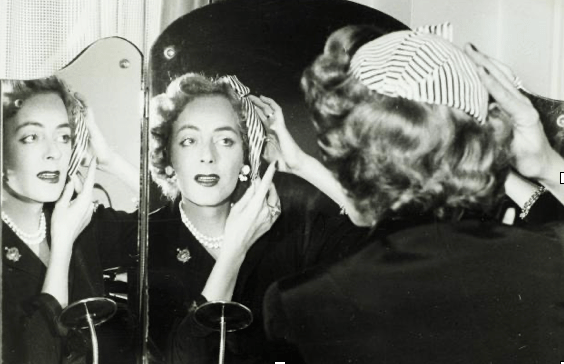
Next year will be the 70th anniversary for the world’s first sex change operation, which involved both surgery and hormone therapy. Christine Jorgensen was the first celebrity transgender. Her story speaks to the emerging tensions between science and sexuality in the 20th century.
Christine Jorgensen was born in 1926 as George Jorgensen Jr., ”a frail, tow-headed, introverted little boy who ran from fistfights and rough-and-tumble games”in the Bronx, New York to an American-Danish family. George had ”a typical, white, middle-class upbringing”, but even as a young child, she knew something wasn’t quite right. Disliking all things boyish, the clothes, haircuts and toys, Jorgensen dreamt of having long hair, female attire and playing with dolls. This early clash of personal needs and social expectations caused young George to feel ”unhappy and hopeless” when it came to her identity.
Photo: Georg V via kb.dk
”What people still don’t understand is that the important thing is identity.You don’t transition for sexual reasons, you do it because of who you are.”– Christine Jorgensen
As a teenager, Jorgensen realized that she was, in fact, different. She felt attracted to other boys, usually male friends but kept denying that she might be homosexual. She felt like ”a woman trapped in a male body”, which deepened her personal trauma. In her wish to adjust, to be needed, to belong and to make her parents proud, George Jorgensen enlisted in the U.S. Army right after finishing high-school in 1945.
At that time, American soldiers that identified as LGBT, if exposed, were at risk of being brought to a military court, which usually resulted in them being dishonorably discharged or put in jail. Jorgensen’s brief army career was publicized in the media, which represented her as a heroic transgender American WWII veteran. Jorgensen, herself, was dismissive of the media coverage saying that people had ”a vivid imagination” regarding her army career. ”No guns, no cannons, no walking through the mud”, she said, explaining that she was not even close to combat because she served as a clerk in Fort Dix, New Jersey.
After an honorable discharge from the U.S. Army, Jorgensen moved to Hollywood with the hopes of finding a job as a photographer. Even though she didn’t succeed at her primary goal, she openly talked about her personal turmoil – for the first time – with her close friends. In 1948, Jorgensen left Hollywood and moved to New Haven, Connecticut where she applied for photography classes in the Progressive School for Photography. She also attended Dental Assistant School in NYC. It was during this period that she read Paul De Kruif’s ”The Male Hormone”.
As a result, Jorgensen recognized that the solution to her “problem” might be taking estrogen, so she contacted Dr. Harold Grayson, a well-known endocrinologist. He, however, refused her wish to undergo hormonal treatmentand directed her to psychiatric therapy instead so she could ”get rid of female inclinations”. Soon enough, Jorgensen learns about medical research being performed on transsexuals in Sweden. On her way to Sweden in 1950, she took a detour to Copenhagen where she meets Dr. Christian Hamburger, a specialist in rehabilitative hormonal therapy. Doctor Hamburger was the first to diagnose Jorgensen as a transsexual. Jorgensen’s sex reassignment surgery procedures began in 1951 and were completed a year later in 1952. Jorgensen choose the name Christine to honor her doctor.
Daily News, New York, New York 01 Dec 1952 via newspapers.com
Even before Christine lands back in the U.S., she was a press sensation. No one knows whether or not she informed the media or if it was a close family friend or a lab technician. Either way, the Daily News revealed her story in December 1952. Her arrival at New York Idlewild Airport (now J.F.K. International) in 1953 was a public spectacle with hundreds of reporters including a police escort. Whether she intentionally caused the attention isn’t important, she embraced it!
Christine Jorgensen arrives at the Idlewild Airport Photo by Art Edger/NY Daily News Archive via Getty Images
Christine Jorgensen’s fame didn’t allow her to have ”a quiet life of her own design”, but it did offer a space for Jorgensen to be a public figure, which she used to educate and advocate for things and causes she cared about. However, the controversy regarding Christine Jorgensen’s vaginoplasty took its toll on her after the media found out that she didn’t have one in Denmark. Christine rarely commented on the details regarding the procedures she had, but the reality is she only underwent the procedure in the U.S. a couple of years later when it became available.
Public appearances were the only way for Christine to earn a living and, while proudly displaying her femininity in a rather traditional way, Christine was banned from television at first, so she started her career as a nightclub performer while also giving lectures and sharing her story. In 1967, she published a chronicle of her life and personal experiences of transition – “Christine Jorgensen: A Personal Autobiography“.
Christine Jorgensen in 1967 Miami Beach, Florida, the Everett Collection via wams.nyhistory.org
In her interviews and public speaking engagements, especially with young students, Jorgensen often emphasized the issue of relating gender identity to one’s physical attributes. When interviewed by Gary Collins in the early 80s, they discussed all the scientific advancements of the era including heart and liver transplants. Jorgensen said, ”By today’s standards, Christina is a very old hat” – referring to a more metaphysicalthan the physical aspects of one’s identity. In the same interview for The Hour Magazine, she explained that opting for sexual reassignment surgery with an expectation of avoiding all the challenges and hardships of a gender is not going to change one’s life. ”It’s who you are that is important”, she said.
Christine led a comfortable life, lecturing and performing around the country, but the public often saw her as lonely considering that she had no success in her personal or more precisely romantic life. After being engaged a couple of times, deeply in love with and deeply loved by, Christine Jorgensen stated: ”I am very comfortable with my life. I kind of go very low-key. I’m content with my life. I live on a hill in Laguna, and it takes a horde of lions for me to come up to LA. But, when I do, I always have a great time”.
Christine Jorgensen cca 1981. Photo by Erika Stone/Photo Researchers History/Getty Images
Even though Jorgensen was not the first person to undergo sex reassignment surgery, she is considered the first internationally known person to have a sex change operation along with hormone replacement therapy. She used her celebrity status ”to control the narrative about her life and advocate for acceptance of transgender people”.
”We seem to assume that every person is either a man or a woman. But, we don’t take to account the scientific value that each person is actually both, in varying degrees.” – Christine Jorgensen, LP Interview with Julius Russell, 1957.
In 1987, Christine was diagnosed with bladder and lung cancer and passed away two years later in San Clemente, California. A few years before her passing, she traveled back to Denmark too, once again, reunite with her doctors. ”We didn’t start the sexual revolution but I think we gave it a good kick in the pants!”
Christine Jorgensen, Georg Stürup and Christian Hamburger, Photo: Ophav Ukendt via kb.dk
Thanks to Christine Jorgensen for creating her narrative, being a pioneer and living her life as her true self.
One might claim that transgender history can be followed through the well-known history of gay and LGBT rights, but that wouldn’t be completely true. Transgender history starts with transgender people, but the problem is the term ”transgender” is a very modern word – first used by the psychiatrist, John F. Oliven, in 1965. Even the term ”gender” itself, in relation to identity and role, is fairly new and has its roots in the mid-20th century. The issue remains complex within itself because the word transgender is often used as an umbrella term. Even today, there is no clear consensus on its meaning and definition.
There is, however, little doubt that transgender history dates back to ancient times. Sumerian and Akkadian texts describes priests who were called galas, as trans men. In ancient Greece and Rome, we also see incidences of priests who were trans women. Antique European and Mediterranean art depicts transgender or transvestite forms. The Roman emperor Elagabalus (Marcus Aurelius Antoninus, c.204 – 222) preferred being called a lady, and even asked for a sex reassignment surgery. Elagabalus is considered one of the earliest trans figures in history. His short reign was marked with sex scandals and religious controversies because he disregarded Roman traditions and sexual taboos.
Hastiin Klah, ’’the one who changes’’ (Navajo). Image via Will Roscoe
Hijras in India and Kathoeys in Thailand were ancient trans feminine/third gender communities, documented in thousand years old documents. These same documents also mention trans men. ArabicKhanith communities have fulfilled the third gender role since the 600s. In pre-colonized America, there were social and ceremonial roles for people whose gender transforms, as it is in the Navajo nádleehi or Zuni ihamana.
Eleanor Rykener, 1395. Image via Marina Amaral, Twitter
Documents from the Middle Ages discuss trans men. Among them is Eleanor Rykener, who was born as John Rykener, a male-bodied Briton. Eleanor was arrested in 1394 while living and doing sex work as a woman. In the Balkans, sworn-virgins (a.k.a. virginas) have been known since the 1400s as females who took roles and the appearance of men when there were no male successors within a family.
Thomas Hall, born as Thomasine Hall, was an intersex person and servant, wearing female wardrobe who provoked public controversy in 1629 in colonial America. The Quarter Court at Jamestown, ruled ”hee is a man and a woeman”, and must dress accordingly, both in ”male and female clothes”. This was considered punishment because prior to Hall’s case the court would allow for an individual to choose the dominant gender and dress/live by their choice.
Jennie June posing as “A Modern Living Replica of the Ancient Greek Statue of Hermaphroditos.” 1918. Photo: Public Domain
At the end of the 18th century, we see more historical documentation of trans/intersex individuals (Public Universal Friend, Albert Cashier, James Barry, Joseph Lobdell, Frances Thompson) and at the very end of the 19th century – a transgender advocacy organisation ”The Cercle Hermaphroditos” was founded in New York City “to unite for defense against the world’s bitter persecution”. The public learns about this organisation thanks to Jennie June (born 1874), one of the first transgender autobiographers in the U.S..
At her time, the term transgender was not known, and the words she used to identify herself were androgyne, effeminate man, passive invert and a fairy. June published ”The Autobiography of an Androgyne” in 1918 and ”The Female-Impersonators” in 1922. She was also a member of ”The Cercle Hermaphroditos” and, according to Susan Stryker, this was the first organization in the U.S. to address what we now know as transgender social justice issues.
Lili Elbe: Man into Woman. An Authentic Record of a Change of Sex, 1926 Image via wellcomecollection.org
At the beginning of the early 1900s, sex reassignment surgeries began. In 1906, Karl M. Baer, an author of a German-Israeli origin, became the firsttransgender person to undergo sex reassignment surgery. He was also one of the first transgender people to gain full legal recognition of gender identity and the right to marry. Baer collaborated with Magnus Hirschfeld, a German sexologist. With Hirschfeld, Baer shared his experience of growing up under the wrong gender. They published a book called ’’Memoirs of a Man’s Maiden Years’’ using a pseudonym N.O. Body. Hirschfeld also worked with Dora Richter, the first person to undergo male-to-femalesex reassignment surgery in 1931, as well as, the Danish painter, Lily Elbe, who had an ovary and uterus transplant.
Christine Jorgensen audio interview, released by J Records in 1958. Image via discogs.com
In the 1952, the media was ablaze with a story about a young person who had gone to Denmark as a man and returned to the U.S. as a woman. The story was about Christine Jorgensen, the first well-known American transgender. In 1951, she went to Copenhagen where she underwent a series of surgeries for sexual reassignment. The media coverage for many transgender Americans was the first time they recognized that there were other people like them.
Coverage included the name of her doctor who received hundreds of letters from people asking for help. Unfortunately, Jorgensen’s fame also made it impossible for her to obtain a regular job due to being transexual. So, she made her living by telling her story over and over again with the goal of educating the public about transexuals.
Cooper Do-nuts cafe. Photo taken from the 1961 film ’’The Exiles’’, by Kent Mackenzie
At the end of the 1950s and a decade before the Stonewall uprising, the fight for trans rights became more visible with trans and gay people confronting the police. Cooper Do-nuts was a cafe in Downtown Los Angeles, which welcomed the LGBT community. In 1950s L.A., it was illegal for a person’s appearance not to match the gender shown on their ID. Needless to say, trans people were especially targeted by the police and discriminated against by the majority of gay bar owners – except Cooper Do-nuts. In 1959, the patrons of Cooper Do-nuts stood up against the persistent police harassment in what became known as the Cooper Do-nuts Riot, which is considered the first modern LGBT uprising.
In 1960, Virginia Prince published ”Transvestia”. The magazine operated on three basic principles: “To provide expression for those interested in the subjects of unusual dress and fashion;To provide information to those who, through ignorance, condemn that which they don’t understand;To provide education for those who see evil when none exists”, in order to help the readers” achieve understanding, self-acceptance and peace of mind’’. Prince was the one who popularized the term transgender and was a transgender activist herself. She started the Foundation for Personality Expression (FPE)and later the Society for the Second Self.
Sylvia Rivera and Marsha P. Johnson, The Film Collaborative via vogue.co.uk
It would be fair to say that the late 60s ended an era and started a new one, when it comes to empowering the LGBT+ rights movement(s), especially considering the aftermath of the Stonewall Riots in 1969. One of the most prominent figures of the Stonewall Uprising was Marsha P. Johnson (who claimed she wasn’t actually present when it all started), and her close friend Sylvia Rivera (who claimed to be the one who started the riot). Regardless of their presence or not on the first day of the uprising, the influence of these two self-identified drag queens and transgender rights activists is undoubtedly recognized in relation to Stonewall. Johnson and Rivera co-founded STAR (Street Transvestite Action Revolutionaries), which provided housing and services for homeless LGBT+, and SONDA (Sexual Orientation Non-Discrimination Act) in New York City. In the 70s, Lou Sullivan, an author and activist, began something what will later be known as FTM International (1986), the first organization for trans men in the U.S..
During the 1980s, several newsletters and magazines of importance to trans people were launched, but the 90s saw the American Psychiatric Association classifying transgender people as having “gender identity disorder”. The brutal murder of Rita Hester, a black transgender woman, in 1998 led to the establishment of the Transgender Day of Remembrance in 1999 due to the efforts of Gwendolyn Ann Smith,a transgender activist. Trans marches became more common during the 1990s and the 2000s especially around the time of Pride.. In fact, the Transgender Pride Flag was first shown during the 2000 Phoenix, Arizona Pride Parade.
Since the 1990s, Candis Cayne, an American actress and artist, has performed in drag and also became the first transgender actress to play a transgender character when she played Carmelita in 2007’s ’’Dirty Sexy Money’’. In 2013, the term gender identity disorder was replaced with gender dysphoria in the U.S., but it was Denmark that became the first country to declassify transgender as a mental disorder in 2017. Let’s not forget, Caitlyn Jenner coming out as a trans woman in 2015 earning the title of being ’’the most famous trans woman in the world’’. Clearly, the past two decades have witnessed many transgender pioneers and many firsts for the trans community in all fields including politics, sports, art, film, music, fashion, the military and academy.
What this article probably failed to represent in full light is the fact that the history of trans people is the history of struggle, self-determination and community building. The amount of harassment, violence and discrimination, sometimes even within the LGBT community, which trans people experience is a challenge even today. But, the aim was to pay respects to some less well-known names in trans history and to see how a community developed itself over the past decades if not centuries.
To become the community that it is today, the trans community had to overcome something that was a crucial element for it’s initial survival and that was – secrecy. The trans experience nowadays is different from what it was decades ago especially among the youth. There is more information available, support groups and all the things which help a young person not to feel alone, as many trans people did throughout history. But in the end, the struggles of their predecessors paved the road for upcoming generations to – if nothing else – just be what they know they are and to express themselves while educating the world.
Soccer (football), tennis, basketball, American football, rugby – these are some of the most popular sports in the world with fans and audiences of billions. Yet, they carry one of the biggest stigmas: professional athletes rarely openly talk about their sexual preferencesespecially if they’re active players, as homophobia is prominent in professional sports.
Research shows that 80% of both LGBT+ and straight people have experienced or witnessed homophobic behavior in sports. While LGBT+ campaigns against homophobia in sports are getting more frequent by the year and discussions about LGBT+ players in sports are getting more public space, there are justa few high-profile players who have decided to come out in public.
Former Premier League soccer player and German international, Thomas Hitzlsperger, is considered a pioneer regarding coming out as a professional athlete. In an interview for The Guardian in 2014, Hitzlsperger claimed that he has always wanted to tell the world that he was gay but was advised against it. However, he did come out, earning the status of the first high-profile soccer player who publicly declared himself as gay.
As Hitzlsperger witnessed, homosexuality was rarely discussed in locker rooms, except in forms of speculation about someone who was not present at the moment. He even admitted playing along when he was younger, in some odd situations, when he himself would use derogatory terms and slurs. Encouraged by other players, like John Amaechi (retired NBA player), Gareth Thomas (Welsh rugby star) and Tom Daley (Olympic diver), who came out, Hitzlsperger wanted to inspire and show support for other football players who might be struggling to open up. Known as the Hammer among his fans, he says that being a professional player and homosexual is normal.Anyone, who’d see him play, couldn’t say that there is something off or ”too soft” with his game.
Robbie Rogers via Denver Post; Victor Decolongon, Getty Images
Another Hitzlsperger inspiration was Robbie Rogers, a former American soccer star. Rogers speaks (and writes) about his early youth, pretending and lying, only to fit into a presumption of what a footballer should be like. He felt like an outcast, as there were no publicly gay men in football. When asked if he knows of other gay men in professional football, Robbie said he didn’t know, but he was sure there were a lot, adding in a jokey way – “many footballers are dressing really well”.“We’ve been trained by our agents how to do interviews, how to present ourselves”, he said, “We’re such great actors.”
Rogers left the game after he came out. Soon after him, Jason Collins, the NBA player, also came out with the words”I am black. And I am gay”. Collins pondered what if he had come out earlier, as a kid in school, would anything be different or easier for someone else in sports? Maybe. But since it didn’t happen, he felt the need to raise his hand now hoping that it might inspire others.
Jason Collins via The New York Times; Jessica Rinaldi/Reuters
Let’s not forget the professional female athletes. Women in sports,who are lesbians or bi, have also reported being stigmatized and experiencing discrimination, especially if they play a traditionally male sport or if they don’t conform to feminine appearance standards. These include widely known tennis players like BillieJean King, Martina Navratilova and Amélie Mauresmo; Patty Sheehan, Rosie Jones and Alena Sharp in golf; Sheryl Swoopes, Sue Bird and Brittney Griner in basketball; and AbbyWambach, Erin McLeod, and Megan Rapinoe in soccer.
What all these pioneers, men and women, have in common is the fact that most of them only felt free to speak up as they were reaching the end of their professional careers. This brings back the question: What about the current and active professional athletes?
Back in the 90s, the footballer, Justin Fashanu, made headlines as the first professional player to come out as gay. Facing everyday pressure, this young ground-breaker took his own life. After this tragedy, there were years of silence, until aforementioned Rogers and quite recently, until the Australian sportsman, Josh Cavallo,came out as gay in October 2021. Cavallo is currently the only top-flight male professional footballer in the world to do so.
Cavallo’s announcement was met with overwhelming public support by footballers and other athletes. A week later, following Cavallo’s coming out, another professional Spanish soccer player announced that he is bisexual, but choose to stay anonymous for now. This unnamed player believes that the message and the support for the movement is more important than a name,as he said in a letter sent to Radio Murcia Cadena Ser.
Cricket Rainbow Laces 2020 Stonewall Campaing via SkyNews
If we are to believe that we really live in times in which social norms are heading towards tolerance and acceptance for all, it appears that this tendency is least visible within sports, especially in male-dominant team sports. Here, being gay is perceived as being soft and weak.This stereotype is the one that every person, mentioned in this blog, has faced, and each one of them represents its negation – a contradiction of what the public often thinks a gay athlete would behave or look like.
With the exception of a few men and women in sports, certain clubs and leagues, who try to be inclusive and supportive, the truth is that homophobia still thrives in sports. The participation in sports, especially in team sports, has a priority status in many countries when it comes to public health policies. Particularly, for psychosocial and physical conditioning of the youths.
Yet, a 2020 study showed that, in the U.S., UK, Canada, Australia, New Zealand and Ireland, almost 50% of LGBT+ individuals experienced some kind of homophobic treatment, even more so if they’ve been open about their sexual preferences. Over 70% of LGBT+ people and straight people believe it is not safe to come out in sport’s environments. The data shows that the prejudicial nature of sport spaces can serve as a deterrent for athletic participation for gay males in particular, as this population appears to be targeted harshly.
OutOn The Fields, Homophobia in Sports; outonthefields.com
Instead of justifying homophobic comments towards opposing teams by saying it’s not personal, comments that perpetuate negative stereotypes should not be part of the game. Yes, not everyone does it but even if a few do, it’s a problem for LGBT+ players. It even seems fair to question the role of the media, especially when reporting on homophobic outbursts from the fans and some players.
Considering the high suicide rates among LGBT+ youth, mainly connected to homophobic environments, something so mainstream as sports shouldn’t normalize homophobia as an everyday practice. Homophobia is not a about sex. If anything, it’s a conversation about rights, values and respect. And addressing homophobia in sports is everyone’s responsibility.
If we are lucky enough to live a long life, we get older. And that’s not a bad thing, right? The passage of time, which is not renewable for humans, gives us more opportunity to experience life.
For those of us looking to connect with different generations, the Daddyhunt community provides us with that opportunity. To bring us older (hopefully, wiser) gay, bi, curious, trans men together with a younger generation that’s attracted to us Daddies not only for our mature looks but also our wisdom and life experiences.
Is Embracing Our Transition Into Being Part of the Daddy Tribe Necessary?
Ultimately, that depends on what you’re looking for in your friends, dates, partners or a relationship and whether or not you’re comfortable owning your age and the label. Some of us certainly like to date within our own age group, while others like me prefer to embrace all flavors – ethnically, physically and age wise. Having dated and been in relationships with older guys and younger guys, I must say the age difference provides a healthy perspective. You view the world from different lenses and if you’re open-minded, you learn a great deal from each other.
But Are There Downsides to Labeling Yourself As A Daddy?
Certainly! As with any label, you are self-defining and perhaps limiting yourself. While I have had my fair share of guys hitting me up on Daddyhunt and other apps (yes, we all use more than one) asking me if I’m a sugar daddy, most guys are interested in a legitimate intergenerational connection – whether that be a chat, friend, date or more.
Ultimately, it’s not about the older man taking care of the younger man, in my opinion. We all know that the best relationships have an equal balance of power, and someone who identifies as a Daddy should definitely know that! In other words, while Daddy is older, he doesn’t reign supreme.
So, what is today’s Daddy in the LGBT+ community? Personally, I think of Daddy as an older gay man with a look, a sense of self-confidence, maturity and a desire to share his life experiences with someone who he’s attracted to who just happens to be younger. Is that such a bad thing? From this Daddy to other open (and closeted) Daddies out there, I think not. So, embrace your inner Daddy!
And One More Thing!
For all of you Daddy-hunters out there, it’s important for you to know that those of us on Daddyhunt who identify as Daddies aren’t interested in being your Sugar anything. There are other apps/websites for that, so (PLEASE!) stop hitting us up with your Venmo, CashApp, PayPal or Amazon Wishlists.
The first recorded podcast came out in 2004 and one year later, podcast became the word of the year in the American Oxford Dictionary. However, at that time, podcasts were far from being what they are now. In fact, it took a decade for the whole world to slowly enter the Golden Age Of Podcasts. Today, it is now estimated that there are over 2,000,000 podcasts available in over 100 languages.
What Is A Podcast?
There are many online definitions of what a podcast is, which explains all the details. To sum it up, a podcast is, basically, a radio show which has its own format, topic and audience. It is almost like an evolved radio show and much more than that. As audio or digital content, podcasts are available on almost every mobile phone and computer device and offers a wide range of subjects one can choose from. The listener can also choose hosts and guests to listen to, whether they are celebrities, politicians, scientists or even some ordinary people with extraordinary experiences.
Podcasts are, usually, free of charge. Portable, therefore, more personal, and available for listening at any given time. The one thing that is being emphasized and can be seen as ‘’a podcast thing’’ is its freedom. The global rise of the podcast format is also interpreted within the needs of society to respond to endangered freedom of speech, critical thinking, censorship and the lack of space in mainstream media for those who think or act differently. So, it is only natural that the LGBT+ community recognized the importance of podcasting and made a space for itself within this contemporary way of communicating with an audience.
5 Podcasts For You To Check Out
There are numerous LGBT+ podcasts available today and many of them are enjoyed not only by an LGBT+ audience. Because the hosts, topics, guests, humor and the way certain subjects are tackled, these podcasts’ reach extends far beyond an LGBT+ only audience. For a first listen, people can use any online podcast search engine and keywords to find what they like. Many Best Podcasts lists are also available online, but you should definitely check out these five (5):
Nancy (WNYC), hosted by two best friends, Tobin Low and Kathy Tu, features a range of topics exploring the LGBT+ experience and is ’’radically honest’’ and super gay while doing so! It really is heartfelt, serious and funny. The first episode is about the drama of coming out to a family member. Not exactly a sit-down in the living room! Nancy aired until 2020, but all the episodes are available at their official webpage: https://www.wnycstudios.org/podcasts/nancy
Making gay history, as the name suggests, is about exploring queer history, identity and intimacy. Most of the episodes rely on the 30-year old audio archives and rare interviews conducted and collected by the host, Eric Marcus. It is very informative and educational. It features personal portraits of known and long-forgotten heroes and witnesses to history. It is available for a listen at: https://makinggayhistory.com/
Food 4 Thot is a multiracial mix of queer writers, Tommy Pico, Denne Michele, Joseph Osmundson and Fran Tirad. The range of topics include some of the filthiest hook-up stories, Mariah Carey’s Vine account, but also queer theory, gender politics, books and authors. The New York Times described it as ’’boisterous, intellectual and sometimes profane’’. It’s been recommended by The Advocate, Out, Oprah Magazine, Vice and many others, so check it out at: https://food4thotpodcast.com/
Queerology is a podcast on ’’belief and being’’ hosted by Mathiass Roberts, a therapist and a theologian himself. Asking questions like Is Christianity inherently queer? , Roberts meets up with philosophers, poets, priests and psychologists to discuss subjects on faith and sexuality, with the aim of exploring ways for better living for LGBT+ people of faith. The podcast is available at: https://matthiasroberts.com/queerology/
Gay Therapy LA is hosted by Ken Howard, a licensed psychologist and a specialist in therapy for gay men with 30 years of experience. Ken gives tips and simple guidance on relationships and other related topics. Among Howard’s episodes, one can find discussions on the emotional, sexual and interpersonal needs of gay men, consensual non-monogamy early in relationships, sexual health and even money management. If it sounds like something you would listen to, visit: https://podcasts.apple.com/us/podcast/gay-therapy-la-with-ken-howard-lcsw-cst/id1450860786
No matter whether you’re on the go or working/relaxing at home, podcasts offer a variety of options for entertainment or to educate yourself about history or what’s currently happening around the world.
Movember is here! The N replaces the M, and M stands for moustache. In an effort to raise both funds and awareness for prostate cancer and other cancers that affect men, the Movember Movement was created. You can learn more here to raise money, donate or get involved.
While the popularity of the moustache itself has risen and fallen throughout time, the premise that people will inevitably ask you about your lip warmer holds true. We guess that’s why in recent years, Movember has gotten so much buzz. They even have a nice mobile app to help you keep your moustauche in check!
Are your participating in Movember? If so, be sure to take pictures and share them with us on our social media or here.